
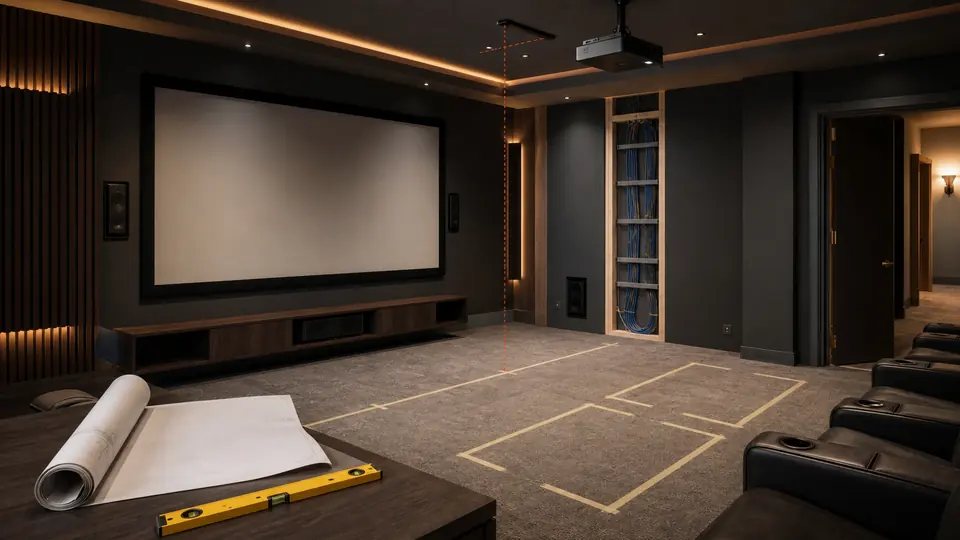
Many home cinema problems begin before the equipment arrives. A cable route is forgotten, the screen is mounted too high, or seats are ordered before anyone checks their full dimensions. Correcting these issues after finishes are complete can be expensive and disruptive.
Here are nine planning mistakes worth avoiding.
1. Buying equipment before designing the room
Discounts can make early purchases tempting, but equipment should match the room. A projector needs the correct throw distance. Speakers need appropriate positions. A receiver needs enough channels and ventilation. A large screen needs a viewing distance that remains comfortable.
Create the layout and system plan first. Then buy equipment that supports it.
2. Choosing the largest screen that fits
Screen size is not a competition. If the front row is too close, viewers may find subtitles and fast movement tiring. If the screen is mounted too high, long films can become uncomfortable.
Mark the proposed image on the wall, sit in the intended seats and test it before committing. Include the frame and the space required for speakers.
3. Putting every seat against a wall
Room boundaries often have uneven bass and strong reflections. A back row placed directly against the rear wall may not sound like the central seats.
Where space permits, leave some distance behind the main listening position. If the layout cannot change, the audio plan and treatment should account for the limitation.
4. Treating speakers as decoration
Surround speakers should be positioned according to the seating and listening geometry, not simply lined up with lights or placed in empty corners. Ceiling speakers should not be moved casually to avoid other services.
Coordinate speakers, lighting, air-conditioning and ceiling framing on one plan before installation begins.
5. Forgetting future cable access
Display standards and source equipment change. Concealed cables can also fail. A room with accessible conduits, labelled routes and a serviceable equipment area is easier to maintain and upgrade.
Run the necessary speaker, signal, network and control paths before closing walls. Photograph their routes and keep the plan with the system documents.
6. Sealing equipment inside furniture
Receivers, amplifiers, projectors and game consoles produce heat. A cabinet may look clean while slowly cooking the equipment inside it.
Plan cool-air intake, warm-air exit and access for service. Do not stack heat-producing equipment tightly. Room air-conditioning alone does not guarantee airflow inside a closed cabinet.
7. Using one lighting circuit for everything
A single bright ceiling light does not support cinema use. You need enough light for cleaning and setup, but very little should reach the screen during a film.
Separate general, pathway and accent lighting where the project allows. Use dimming compatible with the selected fixtures and keep controls easy to find in the dark.
8. Spending the budget only on visible equipment
The projector and speakers attract attention, but installation materials, cabling, electrical work, acoustics, mounting, calibration and seating are part of the experience. Ignoring them produces an impressive shopping list and an incomplete room.
Set a complete project budget. Reserve money for the work that allows the equipment to perform safely and reliably. Our guide to home cinema costs in Sri Lanka explains the main budget drivers.
9. Skipping final calibration and handover
Factory settings are not tailored to your room. Speaker levels, distances, bass integration, projector alignment and source settings should be checked after installation.
A proper handover should also explain normal operation. Ask for clear input labels, remote-control guidance and a record of important settings. The room should be enjoyable without requiring technical knowledge every time you use it.
The value of one coordinated plan
The screen, sound, lighting, seating, cooling and finishes affect each other. Handling them as separate purchases makes clashes more likely. A coordinated design establishes the priorities early and gives each contractor the information needed for their part of the build.
Cinema Builders manages the process from initial planning to final calibration and handover. If you are building a new home or converting an existing room, share the room dimensions and construction stage with us before finishes make the important decisions harder to change.