
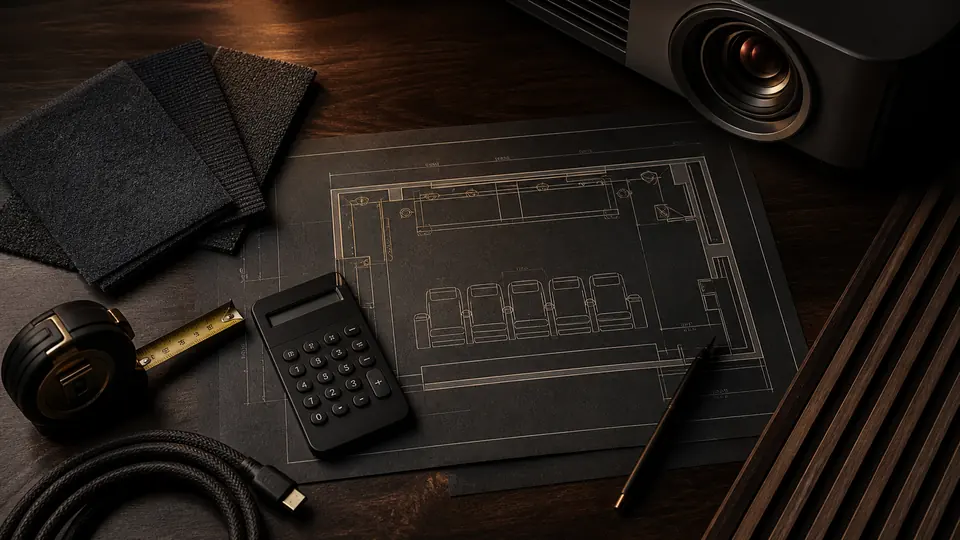
The cost of a home cinema in Sri Lanka depends less on one piece of equipment and more on how the whole room is planned. A projector, speakers and seats may be the most visible items, but wiring, room preparation, acoustics, lighting and installation determine whether those items perform properly.
At Cinema Builders, complete projects start from around LKR 480,000. That is a practical starting point, not a fixed package price. Your final quotation will depend on the room, the experience you want and the work already completed in the space.
What is included in a complete home cinema?
A properly planned home cinema project may include:
- room measurement and layout planning
- screen or television selection
- projector placement where applicable
- speaker, subwoofer and receiver selection
- concealed signal and power cabling
- acoustic treatment
- lighting and electrical coordination
- seating layout and viewing-distance planning
- installation, system testing and calibration
- a final handover showing you how to use the room
Not every room needs every item at the highest specification. The goal is to distribute the budget so that the picture, sound and room work together.
The six factors that affect the budget most
1. The room’s current condition
Converting a finished room is different from working with an empty shell. Existing ceilings, wall finishes, power points, air-conditioning and doors can either reduce or add to the scope. Planning before other construction begins usually makes cable routes and equipment locations easier to manage.
2. Projector and screen versus television
A projector can create a much larger cinematic image, but it also needs suitable light control, mounting, signal cabling and a screen. A large television can be simpler in a bright multi-purpose room. The right choice depends on viewing distance, desired image size and how the room is used—not only the price on the product box.
3. Speaker layout
A basic surround system uses fewer speakers and amplifier channels than a larger immersive-audio layout. Adding channels increases equipment and installation costs, but more speakers are not automatically better. Correct positioning and calibration often matter more than adding channels that do not suit the room.
4. Acoustic treatment and isolation
Acoustic treatment improves what you hear inside the room. Sound isolation reduces how much sound travels to other areas. They solve different problems and use different construction methods. A room that needs significant isolation will require more building work than one that only needs carefully positioned absorption.
5. Seating and finishes
Comfortable residential sofas, dedicated recliners, raised platforms, carpet, wall panels and feature lighting can all be tailored. These choices affect both appearance and cost. We recommend completing the essential technical work before spending heavily on decorative features.
6. Control and convenience
A straightforward system can be operated with the supplied remotes. More advanced projects may combine lighting, source selection and volume into a simpler control experience. This is useful, but it should follow a reliable core system rather than replace one.
Where should you invest first?
For most rooms, the strongest order of priorities is:
- a sensible room layout and cable plan
- clear front speakers and a capable centre channel for dialogue
- correct subwoofer placement and calibration
- a screen size suited to the viewing distance
- basic acoustic control at important reflection points
- comfortable seating and controllable lighting
- decorative upgrades and advanced automation
This order prevents a common mistake: buying an impressive projector or oversized screen while leaving too little budget for sound, installation and room preparation.
Can you build a home cinema in stages?
Yes, provided the final system is planned at the beginning. You might complete concealed cabling, room finishes and a core surround system first, then add seating, acoustic panels or extra speaker channels later. Running the right cables before walls and ceilings are closed is far less disruptive than reopening finished surfaces.
Ask your installer to document cable routes and allow for future equipment ventilation, power and connections. A phased project should still have one overall design.
How to get an accurate quotation
Before requesting a home cinema quotation, collect the following:
- room length, width and ceiling height
- photographs of each wall and the ceiling
- the number of seats you would like
- whether the room is dedicated or multi-purpose
- your preferred screen size, if you have one
- your location in Sri Lanka
- a realistic target budget
- details of equipment you already own
With this information, we can identify what is practical before arranging a site visit.
A better way to compare quotations
Do not compare only the final total. Check whether each proposal includes installation materials, cabling, acoustic work, calibration, room finishes and after-installation guidance. Confirm the exact equipment models and ask why they suit your room.
A good proposal should be understandable. You should know what you are buying, what work will be completed and which parts could change after a site inspection.
Cinema Builders designs and builds dedicated home cinema rooms across Sri Lanka. Tell us about your room and budget for a practical starting point.